Sandy vs Shingle Beaches: Which Is Right for Your Family Day Out?
You park, you walk round the corner of the sea wall or over the last dune, and the verdict arrives before anyone has taken their shoes off. Sand: yes. Pebbles: a pause, then negotiation. Yet plenty of families who swear by soft sand end up enjoying a shingle beach once they know what to expect from it — and a few who worship the stuff will be longing for pebbles by mid-afternoon. The differences that matter are practical. What does the surface feel like underfoot? How easy is it to get into the water? Can you push a buggy across it? Is the dog welcome? And what ends up in the car on the way home? Answer those five questions honestly and you will choose better than any photograph can help you do.
One thing worth knowing first: many British beaches are both. Shingle at the top, sand below, and a completely different beach at low water than at high. A stretch that looks like an assault course of cobbles from the promenade can open into a broad, firm expanse of wet sand once the tide drops — shallow lagoons, rock pools and all. Before you decide you are a sand family or a pebble family, check what yours looks like either side of low tide.
Comfort Underfoot: What Each Surface Does to a Day Out
Sand is the easier surface to spend a long afternoon on. It moulds to you when you sit down, it is warm rather than unyielding, and it keeps children busy without any equipment beyond a bucket. A toddler can dig a hole, bury a leg and be happily occupied for an hour. The catch is that it goes everywhere: stuck to damp skin, migrating into sandwiches, blowing into eyes on a breezy day and getting uncomfortably hot underfoot in strong summer sun. On a 28°C afternoon the top layer can be genuinely too much for bare feet, so test it with your own palm before letting a small child sprint across it. A beach mat helps. A brush in the car helps more.
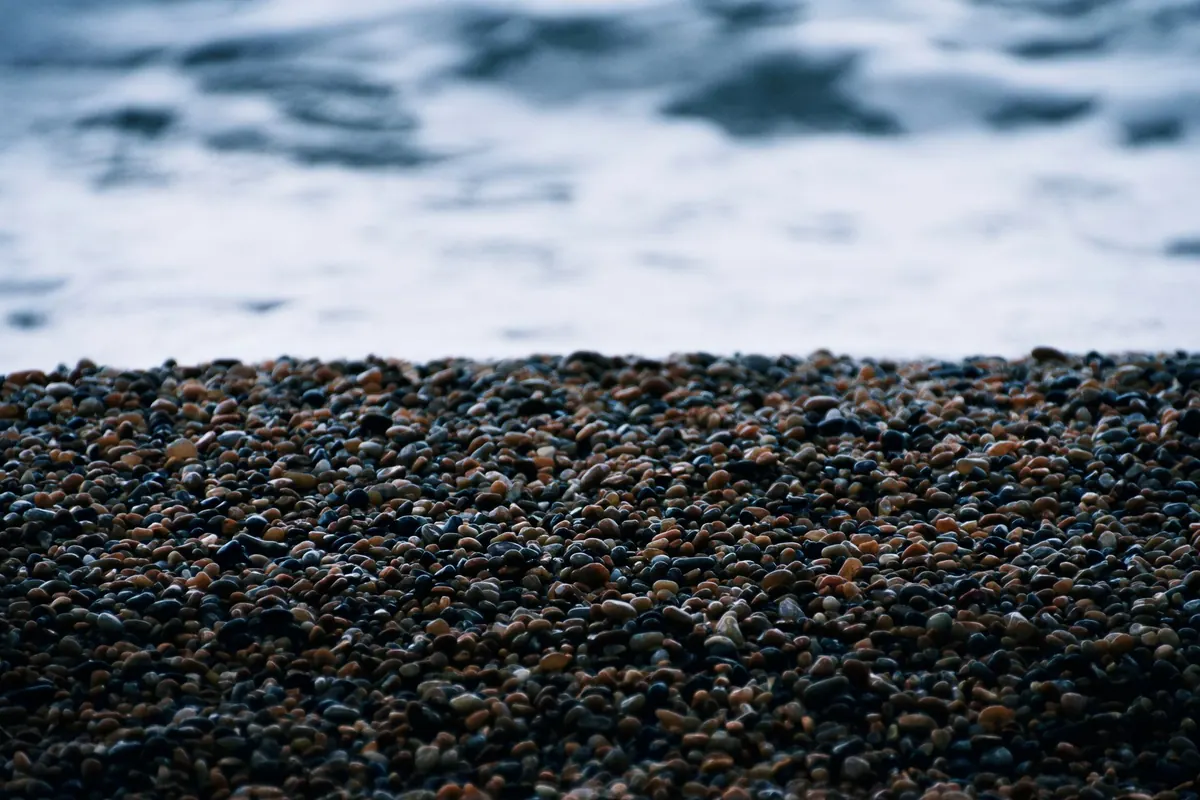
Shingle asks more of you. Walking across cobbles is slow work — the stones shift under each step, so a trip to the waterline that takes thirty seconds on sand can take three minutes — sitting straight down on them is unpleasant, and barefoot is a mistake for anyone over about four years old. Bring something to sit on and shoes you do not mind getting wet. In exchange you get a surface that drains instantly, so there is no damp patch under your blanket after rain or a high tide, and nothing sticks to you. It is quieter in both senses, too: fewer crowds, no grit in the sandwiches. Children who tire of digging will happily collect, sort and skim stones instead, which costs nothing and lasts surprisingly long.
Getting In the Water
This is where the two types of beach differ most, and where the choice starts to matter for safety rather than comfort.
Sandy beaches usually shelve gently, which gives you a wide band of shallow water for paddling and for small children to potter about in. That same gentleness means the shallows are often busy, and on bigger beaches there can be channels and sandbars that shift with the tides. If you plan to swim rather than paddle, ask a lifeguard about conditions on the day.
Shingle beaches are frequently steeper. The bottom drops away within a few steps and waves tend to break closer in and with more force — good news for bodyboarders, less good news for a seven-year-old on an inflatable. Enter slowly, feet first, and never dive into water whose depth you have not checked.
Two points apply to both. British sea temperatures are cold even in high summer, so wade in gradually and watch children closely for their first minute in the water. And swim between the red and yellow flags on a lifeguarded beach, staying out when the red flag flies. If a current starts pulling you out, do not fight it; swim parallel to the shore and raise an arm for help.
Accessibility and Getting Your Kit Across the Beach
Sand is hard work for wheels. Buggies sink, wheelchairs are impractical without wide tyres, and dragging a cool box fifty metres feels like five hundred. Shingle is no better — pebbles roll under a tyre and a trolley digs in — but shingle beaches are more often backed by a promenade, boardwalk or gently sloping ramp, so you can sometimes set up within a few metres of the car.
Distance from the car park usually matters more than the surface itself. A sandy beach with a short, level path will beat a pebble beach at the bottom of a steep flight of steps every time. Some councils lend beach wheelchairs with balloon tyres for the day; ring the seafront office or visitor centre before you travel to ask. Otherwise, pack one rucksack rather than three bags, and claim a spot near an access point rather than at the prettiest far end of the beach.
Tide makes a difference here too. The same beach can leave you a two-metre hop to the water at low tide and a fifty-metre trek across soft ground at high tide, so check the tide times before you decide where to put the bags down.
Dogs on Sand and Shingle
Rule number one: check the local council's rules before you go. Many beaches, or stretches of them, exclude dogs or require leads between spring and the end of September, and a single beach can have a dog-free section at one end and a dog-friendly one at the other. Signage at the access point is usually clear, but the council website is the reliable source.
Once you are there, the two surfaces behave quite differently for a wet dog. Sand clings to damp fur and works its way into every crevice, so a sandy beach usually ends with a rinse under a fresh-water tap and a towel you are happy to sacrifice. Shingle is kinder: most of the water shakes off and the grit falls away on its own. The trade-off is heat. Pale pebbles in direct sun get very hot under paws by early afternoon, so aim for morning or evening walks on shingle in a heatwave. On both, carry water — there is rarely a bowl on the beach — and remember that a dog loose among families with sandwiches is a fast route to an argument.
What Comes Home With You
Think about the end of the day, not just the middle of it. A little planning keeps the car usable:
- A soft brush or old towel for feet, paws and ankles before anyone gets back in.
- A plastic bag for wet swimwear and pebble collections — there will be pebble collections.
- Bottled water for rinsing sandy hands and filling a dog bowl.
- Flip-flops or beach shoes if the beach is shingle, and something with grip for the walk back up a ramp.
- A spare carrier bag for the inevitable wet, sandy item you did not plan for.
Which Beach Suits Which Family?
There is no universally better surface, only a better match. A rough guide:
- Babies and toddlers: gently shelving sand, with a mat and a shade tent.
- Children who want to swim and bodyboard: shingle, entered slowly, or a sand beach with lifeguards on duty.
- Anyone pushing a buggy or wheelchair: whichever beach has the shortest, flattest route from the car — usually shingle behind a promenade.
- Dog owners: shingle, outside the dog-ban months.
- Families who hate sand in everything: shingle, a picnic blanket and a pair of beach shoes.
The best beach is rarely the prettiest one. It is the one your family can get onto, settle on and leave again without an argument.
So read the tide table, check the dog rules and look at the access before you commit. Then take the beach you have got rather than the one you wish you had — because a family that arrives expecting pebbles and remembers the beach shoes will have just as good an afternoon as one that arrives expecting sand.
Photo: Marc Puddy / Pexels