Most trips to the coast go exactly to plan. You park, you walk, you eat chips in the wind, you drive home with sand in the footwells. The days that go wrong rarely come down to bad luck. They come down to the same few assumptions, and every one of them is easy to correct.
Here are the seven mistakes we see most often on British beaches, and the small habits that stop a good day turning into a long one.
Sitting directly beneath a cliff
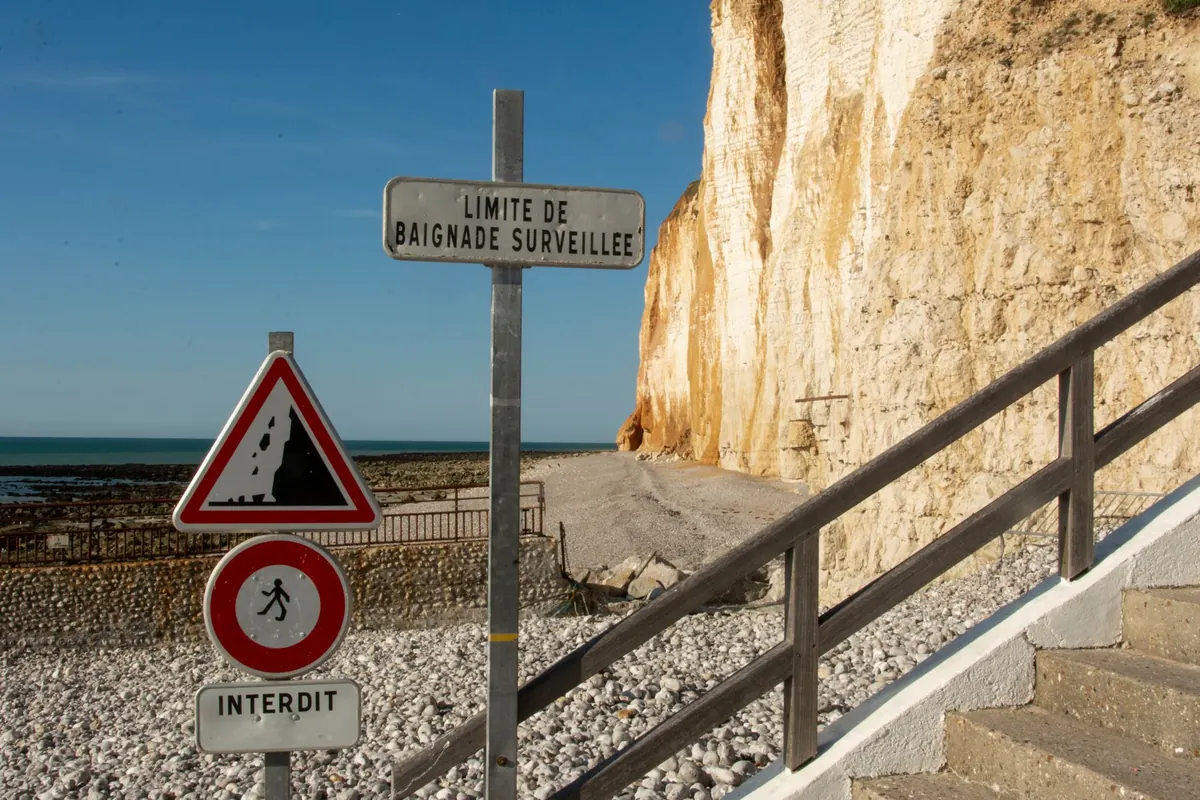
There is something irresistible about the shade at the foot of a cliff on a hot afternoon. It is also the worst place on the beach to lay out a towel. Cliffs crumble. Frost, rain and the sea undercut them, and falls of rock or sand happen without warning and often without much noise. You will not outrun anything that comes off a cliff face.
Look at the ground before you sit down. Fresh rubble, pale scars on the rock, blocks that clearly were not there last summer — all reasons to move further along. Keep children and dogs away from the base, and if you want shade, walk up towards the back of the beach rather than pressing yourself against the wall. The same applies to sand cliffs and the seaward edge of dunes, which can collapse under a single footstep.
Letting the tide make the decision for you
The tide does nothing dramatic. There is no wave, no roar. The water simply arrives, quietly, and the stretch of sand you walked out across twenty minutes ago is suddenly wet, then deep, then gone. On a flat beach, the route home is often flooded before the water even reaches you.
Check tide times for the exact beach you are visiting, not the nearest big town — an estuary or a headland can shift the timing noticeably. Note when high water falls, then work backwards and give yourself a real margin. If high water is at four, be off the sandbank by two, not half past three. Pick a fixed landmark — a groyne, a slipway, a distinctive rock — and watch how the water moves against it.
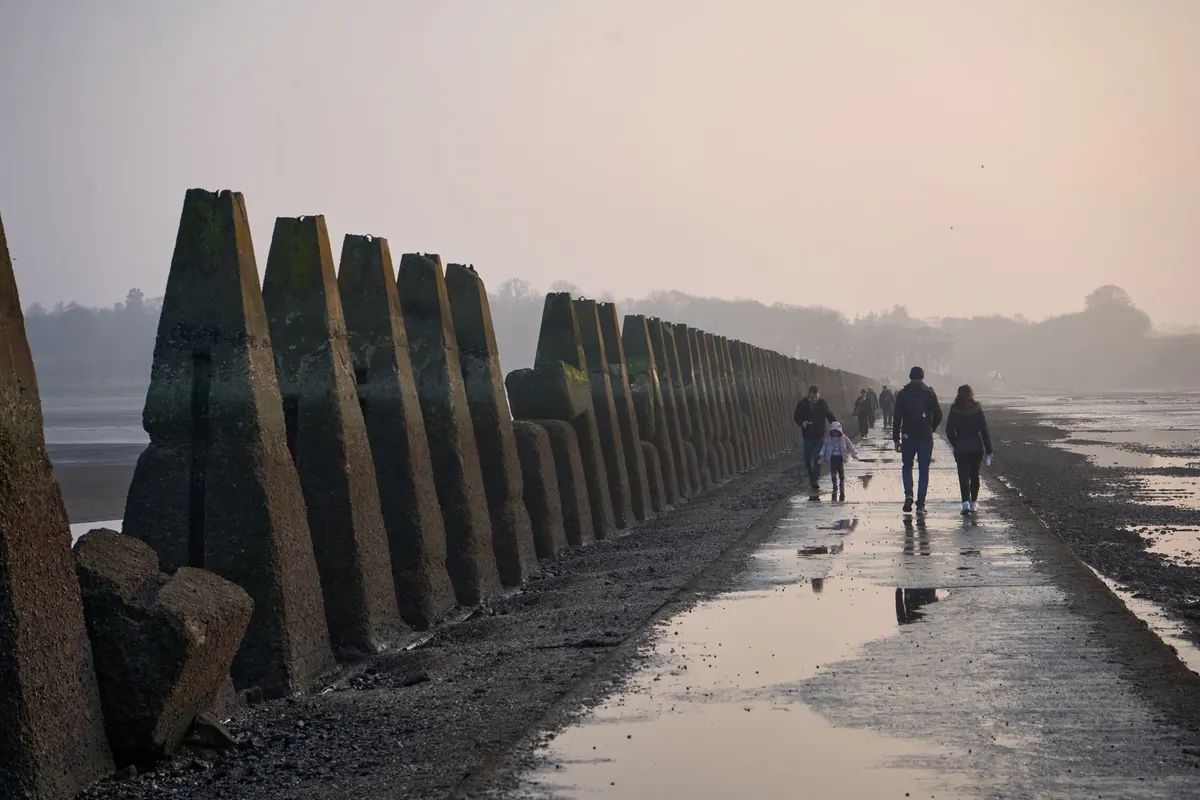
If you are crossing a tidal causeway or a road that floods, use the published safe crossing window and never cut it fine. A car caught by saltwater is an expensive write-off, and estuary mud is far more dangerous than it looks.
The ten-second habit
Before you leave the car, note the time of high water and the time you need to be back. Set an alarm. Then identify your exit route — steps, a slipway, a path up the cliff — while the tide is still low. Knowing where the ways out are turns a scramble into a short walk.
Underestimating the cold
The sea around our coast stays cold all year. Even at the end of a warm August it is cold enough to take your breath away, and that gasp is the whole problem. Cold water shock makes you inhale sharply, speeds up your heart and tightens your chest. It is why strong swimmers get into difficulty in water they would have managed comfortably a month later.
You can reduce the risk considerably. Walk in, don't jump. Splash your face and wrists, let your breathing settle, and keep the first swim short — a few minutes is plenty. Wear a wetsuit if you intend to stay in, and get dressed properly afterwards: hat, warm layer, something hot to drink. Don't swim after drinking alcohol, and never dive into water where you cannot see the bottom.
If you have a heart or lung condition, are pregnant, or are simply unsure how cold water will affect you, speak to your GP before you start.
Swimming outside the flags
Between the red and yellow flags is the only part of the beach a lifeguard is actively watching. Outside them you are on your own, which is fine as long as you have thought it through.
- Choose a beach you know, and swim with someone else.
- Tell a friend where you are going and when you expect to be back.
- Assume there is no mobile signal, because there often isn't.
- Stay clear of rocks, piers, groynes and estuary mouths, where currents are strongest.
Fighting a rip current
A rip is a narrow channel of water heading out to sea, and it moves faster than you can swim. The instinct is to turn and head straight for the beach. That is the one thing that will exhaust you quickest.
Swim parallel to the shore until the pull releases, then angle back in. If you cannot make progress, float on your back, keep one hand up and call for help when you have breath to spare. Most rips are narrow, and they do not drag you under — they carry you out.
If someone else is in trouble, don't go in after them. Dial 999 and ask for the coastguard, then throw them something that floats.
Packing for the forecast instead of the beach
Coastal weather is not the weather you left at home. The sea breeze builds through the afternoon, wind on an open beach makes a mild day feel raw, and sun reflects off water and wet sand, so you burn faster than you expect — including under thin cloud.
Pack for three outcomes: sun, wind and a sudden change. A windproof layer, a hat that stays on, sunglasses, high-factor sun cream, water and a snack cover most of it. Choose shoes for the ground rather than the photograph: shingle hurts through thin soles and rock pools are slippery. Take a bag for your rubbish and something dry to change into, and keep the car key in a waterproof pouch. Never leave a phone or a wallet on the sand while you swim.
Treating the coast as a fixed backdrop
The coastline is a working place, not a film set. Sand moves overnight, dunes erode, and a path that was open in spring may be closed by autumn.
Don't drive onto sand unless you know the beach and the exit well; soft sand and saltwater do expensive things to cars, and tide-cut car parks fill faster than you would think. Stay off dune systems — they are fragile, often roped off for nesting birds, and the sand can hide adders. Give seals a wide berth on land and in the water, keep dogs on leads, and never herd an animal back into the sea. Take everything home, including fishing line, picnic leftovers and disposable barbecue coals, which stay hot long after they look dead. Leave the pebbles where they are, too; they are part of what holds the beach together.
A five-minute check before you walk down to the sand
None of this takes long, and done once it becomes the way you arrive at the coast:
- Check tide times for this exact beach and note the time of high water.
- Work out when you need to leave the sand, and set an alarm.
- Find your exit route while the tide is still out.
- Note where the lifeguards are, and swim between the flags.
- Pick a landmark so you can judge how fast the water is moving.
- Pack a layer, water, sun cream and shoes you can actually walk in.
- Tell someone your plan and your rough return time.
- Take a bag for litter — yours and anything you find.
Get those habits in place and the coast becomes what it should be: a place to slow down, not a place to keep one eye on the water.
Photo: Jan van der Wolf / Pexels